Bauer Couplings vs Camlock Fittings: Which Should You Choose?
Choosing the right hose coupling is essential for ensuring safe, efficient and reliable fluid transfer. Whether you’re working in agriculture, construction, industrial processing or water management, the type of coupling you select can affect everything from system performance to maintenance requirements.
Two of the most widely used connection systems are Bauer couplings and Camlock fittings. Both are designed for quick hose connections without the need for specialised tools, but they differ significantly in design, performance and typical applications.
In this guide, we’ll explore the differences between Bauer and Camlock couplings, examine their pros and cons, and explain when each type is most suitable. By understanding their strengths and limitations, you’ll be better equipped to choose the right fitting for your application.
What Are Bauer Couplings?
Bauer couplings are a type of ball-and-socket quick-connect hose fitting commonly used in agricultural and pumping systems. They are designed to connect hoses quickly while allowing some flexibility in the joint.
The system consists of a male and female coupling that lock together using a lever mechanism and seal with a rubber ring. Once connected, the couplings form a secure seal capable of handling high flow rates and challenging working conditions.
Key Features of Bauer Couplings
Ball-and-Socket Design
One of the defining features of Bauer couplings is their articulated ball-and-socket joint. This allows a small degree of movement and flexibility once the hoses are connected, which is particularly useful on uneven terrain or in applications where hoses may shift during use.
Lever Locking Mechanism
Bauer couplings use a simple lever system that allows operators to quickly secure the connection without tools. The mechanism is robust and easy to operate, even when wearing gloves.
High Durability
These couplings are typically manufactured from galvanised steel, making them highly durable and resistant to wear, corrosion and mechanical stress.
Large Diameter Capability
Bauer couplings are commonly used with large-diameter hoses, making them well suited to high-volume water or slurry transfer systems.
Common Applications
Because of their strength and flexibility, Bauer couplings are widely used in:
- Agricultural irrigation systems
- Slurry and wastewater transfer
- Construction pumping operations
- Water management and drainage
- Tanker and liquid transport systems
- Advantages of Bauer Couplings
There are several reasons why Bauer couplings remain a popular choice for demanding applications:
- Flexibility in the connection thanks to the ball-and-socket design
- Strong and durable construction suitable for tough environments
- Quick connection and disconnection with minimal tools required
- Reliable sealing for high-volume fluid transfer
These characteristics make Bauer couplings particularly effective in outdoor and heavy-duty environments.
Potential Limitations
Despite their strengths, Bauer couplings are not always the ideal choice for every application.
Some possible drawbacks include:
- Heavier fittings compared to alternatives like Camlocks
- Less global standardisation, which can affect compatibility across systems
- Larger physical size, which may not suit compact installations
For applications where lightweight fittings and universal compatibility are important, Camlock fittings may be a better option.
What Are Camlock Fittings?
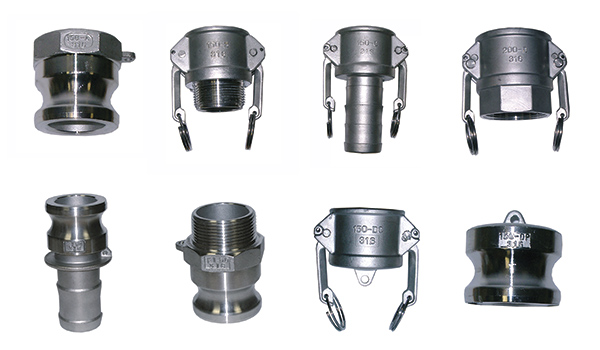
Camlock fittings are another widely used quick-connect hose system. They are designed to allow fast and secure connections without tools, making them extremely popular across a wide range of industries.
A Camlock system consists of two parts:
- A male adapter with a groove
- A female coupler with cam arms
When the two components are connected, the cam arms are pushed down, locking into the groove and compressing a gasket to create a tight seal.
Key Features of Camlock Fittings
Quick-Connect Design
Camlock fittings are designed for rapid connection and disconnection, making them ideal for systems where hoses are frequently attached or removed.
Wide Range of Materials
One of the biggest advantages of Camlock fittings is their availability in multiple materials, including aluminium, stainless steel, brass and polypropylene. This allows them to be used in applications involving water, chemicals, fuels or food products.
Standardised Sizes
Camlock fittings follow widely recognised sizing standards, which means components from different manufacturers are often compatible.
Lightweight Construction
Many Camlock fittings, especially aluminium and polypropylene versions, are lightweight and easy to handle.
Common Applications
Camlock fittings are used across numerous industries, including:
- Chemical and petrochemical transfer
- Fuel and oil handling
- Food and beverage production
- Industrial fluid transfer
- Water management and pumping
Their versatility and ease of use make them one of the most common coupling types used in modern fluid handling systems.
Advantages of Camlock Fittings
Key benefits of Camlock fittings include:
- Fast connection without tools
- Lightweight and easy to handle
- Highly versatile across industries
- Standardised sizing and compatibility
These features make them ideal for applications requiring frequent hose changes.
Potential Limitations
However, Camlock fittings also have some limitations. For example:
- They generally require proper alignment when connecting hoses
- They do not allow much movement once connected
- Cam arms must be fully secured to avoid accidental disconnection
In environments where hoses may shift significantly, Bauer couplings can sometimes offer a more reliable solution.
Bauer Couplings vs Camlock Fittings: Key Differences
Although both are quick-connect hose systems, there are several important differences between Bauer and Camlock fittings.
Connection Mechanisms
The biggest difference between Bauer and Camlock couplings lies in their connection systems.
- Bauer couplings use a ball-and-socket joint with a locking lever
- Camlock fittings use cam arms that lock into a grooved adapter
Both systems allow fast connections, but they are not compatible with each other.
Flexibility
Bauer couplings offer greater flexibility due to their articulated joint. This allows the hose to move slightly without putting stress on the connection, which can be beneficial in agriculture or mobile pumping applications.
Camlock fittings, by contrast, require hoses to remain relatively straight and aligned.
Pressure and Durability
Bauer couplings are generally designed for heavy-duty environments, especially where large hoses and high flow rates are involved.
Camlock fittings are suitable for many industrial applications but are often used in moderate-pressure systems.
Ease of Use
Both systems are simple to operate. However, Camlock fittings are often preferred in environments where hoses need to be connected and disconnected very frequently.
Industry Usage
In general:
- Bauer couplings are more common in agriculture, irrigation and slurry systems
- Camlock fittings are widely used in industrial fluid transfer, chemical handling and fuel systems
Bauer vs Camlock Couplings: Pros and Cons
Understanding the pros and cons of each type of coupling can help you make the right choice.
Bauer Couplings Pros:
- Flexible ball-and-socket connection
- Strong and durable construction
- Ideal for irrigation and slurry systems
- Handles movement and vibration well
Bauer Couplings Cons:
- Heavier fittings
- Less universally standardised
- Larger size compared to Camlocks
Camlock Fittings Pros:
- Lightweight and easy to handle
- Quick connection without tools
- Available in many materials
- Highly standardised and widely available
Camlock Fittings Cons:
- Limited flexibility once connected
- Require proper alignment
- Can loosen if cam arms are not fully secured
- When to Use Camlock Fittings
When to Use Camlock Fittings
Camlock fittings are particularly useful in applications where speed and versatility are priorities.
Typical situations where Camlocks work well include:
- Industrial fluid transfer systems
- Chemical handling and processing
- Fuel and oil transfer
- Food and beverage production
- Water transfer in controlled environments
Because they are lightweight and easy to connect, they are ideal for systems that require frequent hose changes.
When to Use Bauer Couplings
Bauer couplings are typically the better choice in more demanding environments.
They are commonly used in:
- Agricultural irrigation systems
- Slurry and wastewater pumping
- Construction water transfer systems
- Applications with uneven terrain
The flexible connection makes them particularly useful when hoses need to move during operation.
How to Choose the Right Coupling for Your Application
Selecting the best coupling type involves considering several factors.
Some of the most important include:
- Operating pressure
- Hose diameter and flow requirements
- Type of fluid being transferred
- Frequency of hose connections
- Working environment and terrain
For example, a chemical processing plant may benefit from the versatility of Camlock fittings, while an irrigation system operating across uneven farmland may perform better with Bauer couplings.
If you are unsure which option is best, consulting a specialist hose supplier can help ensure you choose fittings that meet your system’s requirements.
Final Thoughts
Both Bauer and Camlock fittings offer reliable quick-connect solutions for hose systems, but they are designed with different applications in mind.
Bauer couplings are known for their durability and flexibility, making them well suited to agricultural irrigation, slurry transfer and heavy-duty pumping operations.
Camlock fittings, meanwhile, provide fast, lightweight and versatile connections, making them ideal for industrial fluid transfer, chemical handling and food-grade applications.
Understanding the differences between Bauer and Camlock couplings will help ensure you select the most effective and reliable fitting for your system.
FAQs
What is the main difference between Bauer and Camlock couplings?
The main difference between Bauer and Camlock couplings is their connection mechanism. Bauer couplings use a ball-and-socket joint with a locking lever, while Camlock fittings use cam arms that lock into a grooved adapter.
Are Bauer couplings compatible with Camlock fittings?
No, Bauer and Camlock systems use completely different designs and are not directly compatible.
When should you use Camlock fittings?
Camlock fittings are ideal for industrial fluid transfer, chemical handling, fuel transfer and food processing systems, especially where hoses are frequently connected and disconnected.
Are Bauer couplings suitable for high-pressure applications?
Bauer couplings are designed for heavy-duty fluid transfer systems, particularly in agriculture and pumping applications, making them suitable for demanding environments.
 Proud to be a UK manufacturer